
Hummock Pond Opening in Nantucket: The Twice-Yearly Story
September 10, 2026
September 10, 2026
If you live along Hummock Pond Road, you already know the ritual. Sometime in spring and again in fall, a crew from the Town's Natural Resources Department shows up with equipment, cuts a channel through the barrier beach, and lets the Atlantic pour in. Most people who watch it happen assume the point is the water: fresher, saltier, cleaner, whatever adjective feels right that day. The water is not the story. What actually matters is what swims out in the first hour, and why that window barely lasts long enough for anyone to notice.
Hummock Pond is one of only two bodies of water on the island the Town classifies as a Great Pond, meaning it covers more than 10 acres and gets managed as its own estuarine system. The Town's own baseline numbers put it at roughly 142 acres with an average depth of about six feet. When Nantucket Current covered the opening in April 2026, the outlet described the pond as topping 220 acres. That is not a typo or a disagreement between sources. It is the pond doing what a eutrophic coastal pond does after a wet winter: swelling with rain and groundwater until the barrier beach in front of it is the only thing holding the Atlantic back.
That beach is not accidental infrastructure. According to the Town's Pond Openings page, Hummock Pond and its northeastern counterpart, Sesachacha Pond, are both maintained through a scheduled spring and fall breaching of the barrier beach, timed to specific tide and weather conditions rather than a fixed calendar date. The openings exist to lower nitrogen levels and raise salinity by trading brackish pond water for high quality water offshore, and to let marine species like herring and blue crab move between the two systems.
The pond you see today is not the shape it held before 1978. According to the Nantucket Pond Coalition, Hummock Pond originally formed a hook shape, but the storm that hit during the Blizzard of 1978 sheared off its western side. That severed piece became its own body of water, Clark Cove, now separated from Hummock by beach, dunes, and the ocean-facing end of Sanford Farm's Ram Pasture. What used to be one connected pond is now two, divided by a storm nearly five decades ago and still visible in how the land sits today.
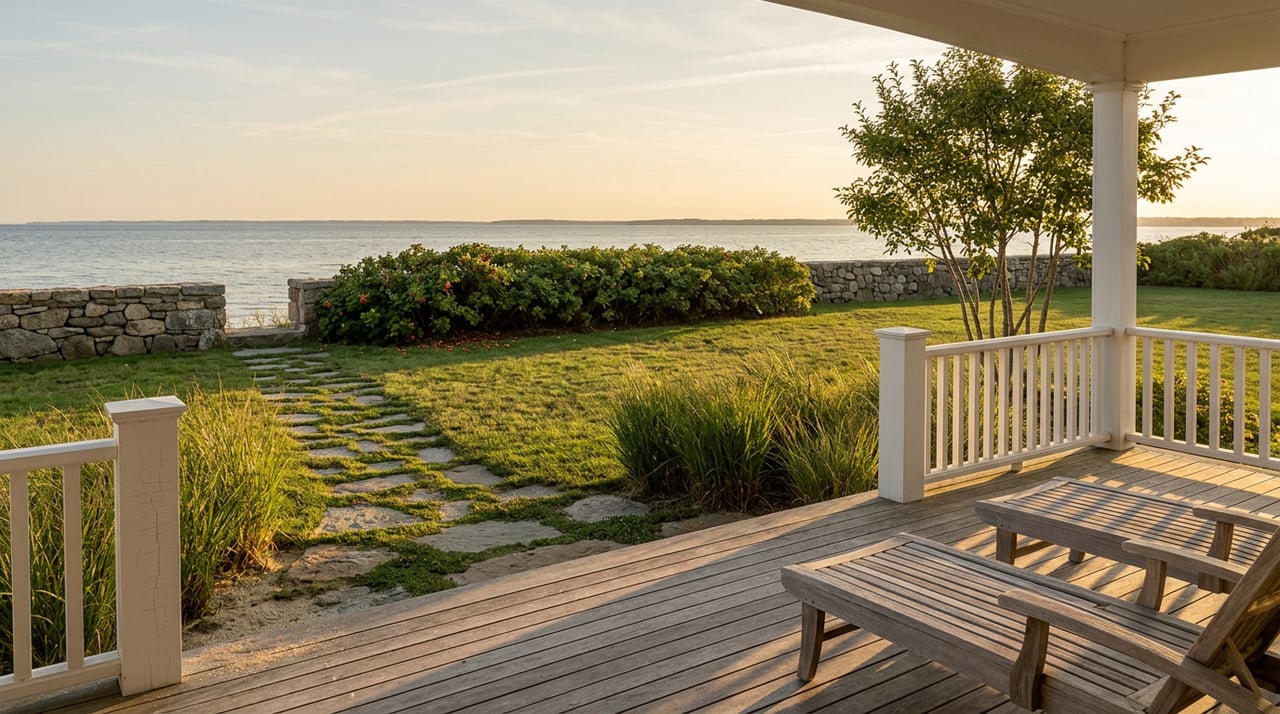
If you want to see any of this up close without trespassing on private property, the access points are specific and public. The Land Bank's Lost Farm property off Millbrook Road and its Gardner Farm parcel off Hummock Pond Road both reach the pond directly, and the Nantucket Conservation Foundation's Sanford Farm, accessible off Madaket Road, borders it from the north. These are working conservation properties, not overlooks built for spectators, so the pond is best watched the way locals already watch it: on a walk you were taking anyway.
Here is the part that surprises people who assume the twice-yearly cut is a permanent fix. The Town's own historical monitoring, drawn from an earlier annual report on the pond, recorded salinity at 3.3 parts per thousand right before a spring opening. After the ocean poured in, salinity jumped to 11.5 parts per thousand. That is a real, measurable change. But salinity in Hummock Pond does not hold. As groundwater and rain keep feeding the pond through the summer, salinity drops steadily, by roughly one to two parts per thousand each month, until it is back down near where it started by the time the next opening rolls around in the fall.
In other words, the breach does not fix the pond. It resets it, briefly, and then the pond spends the rest of the season sliding back toward fresh water on its own.
| What's measured | Before spring opening | After spring opening |
|---|---|---|
| Salinity | 3.3 ppt | 11.5 ppt |
| Pond classification | Coastal salt pond, eutrophic | Same, temporarily improved |
That instability is exactly why the Town keeps doing this twice a year instead of once. The Nantucket Pond Coalition classifies both Hummock Pond and its upper section, known as Head of Hummock, as impaired, with Head of Hummock labeled severely impaired. Without the periodic flush, nitrogen keeps accumulating from the surrounding watershed, and dissolved oxygen drops in the deeper water during the warmest months, conditions that stress the fish and invertebrates living there. The breach is maintenance, not a cure. It buys the pond several months of healthier water before the cycle has to run again.
Historically, each opening has lasted about five days before the channel closes back up, whether through natural sand movement or because the tidal exchange runs its course. That means in a typical year, Hummock Pond is connected to the open Atlantic for roughly ten days total, split between one window in spring and one in fall. The rest of the year, the barrier beach holds and the pond behaves like the enclosed, slowly freshening system its salinity numbers describe.
This year's spring opening happened in April 2026, with Nantucket Current on hand to document it. The Town's crew opened Sesachacha Pond the same week, on the island's opposite shore, since both Great Ponds get cut on a similar schedule by the same Natural Resources Department team. If the historical pattern holds, and past fall openings have landed in the final days of October, residents along Hummock Pond Road can expect the next cut sometime this fall, though the exact date depends on tide conditions and weather the Town has not locked in yet.
Here is the detail that gets lost in most descriptions of a pond opening. When the Town's crew documented the companion opening at Sesachacha Pond this year, they noted something specific: large eels were observed leaving the pond and heading into the ocean within the first hour of the water exchange. Not days later. Not once the channel had settled into a steady flow. Within the hour.
Hummock Pond supports the same kind of wildlife. The Pond Coalition lists painted and snapping turtles, American eels, blueback herring, chain pickerel, sunfish, and small-mouth bass among the species using the pond's fresh and brackish water, along with mute swans, several duck species, nesting ospreys, and great blue herons, great egrets, little egrets, and black-crowned night herons working the shallows for fish. Most of these animals spend the entire closed season boxed into a pond with no direct route to salt water. The twice-yearly breach is their door, and for a species like the American eel, that door does not stay open for long.
So if you happen to be walking the Land Bank's Gardner Farm parcel or Sanford Farm on the day the crew shows up, the water itself will look like exactly what it is: sandy, churned, unremarkable. What is worth watching is the mouth of the new channel in that first hour, when whatever has been waiting all season finally has somewhere to go.
None of this changes anything about property lines or zoning along Hummock Pond Road. What it does change is how you read the pond itself. It is not a static feature that happens to border some of the neighborhood's most private lots. It is a system that spends most of the year quietly losing its salt, and only reconnects to the ocean for about ten days annually, on a schedule the tides decide more than the calendar does. The turtles, herons, and eels that use it are working around a much older rhythm than the one most residents notice, and the Blizzard of 1978 is still shaping which side of the water you are standing on when you watch it happen.
If you live along Hummock Pond Road, keep an eye out this fall. Based on the historical pattern, the next breach is likely coming in October, and it will be gone again in about five days.
If you are thinking about what a property along Hummock Pond Road, or anywhere else on the island, actually means for how you live day to day, Start the Conversation with Jen Shalley Allen.
This article is general information, not legal, tax or financial advice. Consult a qualified professional about your situation.


Whether you're a year out or a week out, the right time to talk is before the listing hits the market. I respond to every inquiry personally, usually within 24 hours.