The Building at the End of the Surfside Path Has Finally Stopped Waiting
October 1, 2026
October 1, 2026
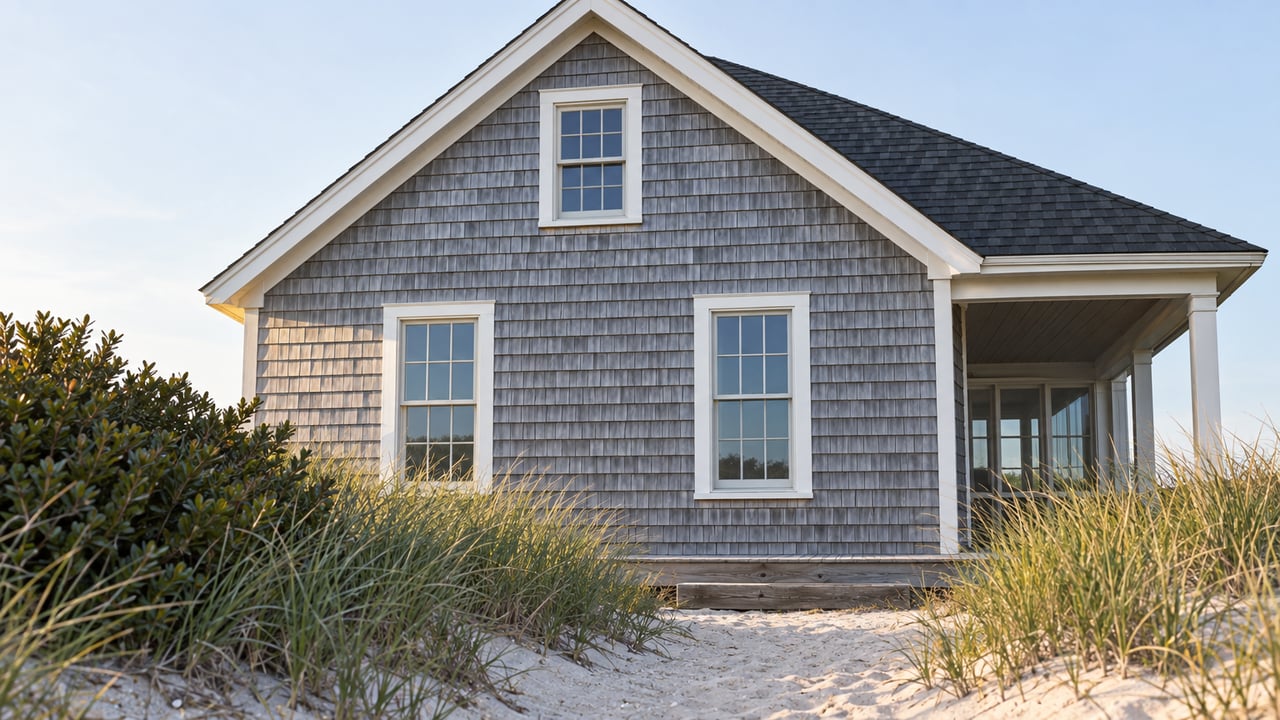
Ride the Surfside bike path far enough and the houses thin out, the dune grass takes over, and then the path curves toward the beach entrance where a weathered structure with a steep, gabled roof and a small cupola comes into view. Most people who pass it on the way to the sand know it as the old hostel. Fewer know it was standing here a half-century before the hostel existed, and that its future has been an open question for six straight years.
That question is now answered, and the answer says something about how this particular corner of the island actually works.
The main building at 31 Western Avenue was built in 1874 as a U.S. Life-Saving Service station, one of four constructed on Nantucket and the only one still standing today. Its first rescue came on March 9, 1877, when the crew of the ship W.F. Marshall was brought ashore safely, according to the Library of Congress's Historic American Buildings Survey. The station was enlarged in 1884 with the addition of east and west wings and the enclosed cupola that still marks the roofline, and it served through 1921, when the Coast Guard abandoned it as shipwrecks off Surfside grew rare.
According to Nantucket Current, the federal government held the property until 1962, when Lilye Mason, a longtime housemother for American Youth Hostels, bought it and converted it for hostel use. A year later she sold it to American Youth Hostels, now known as Hostelling International, and for decades the building operated as the Star of the Sea youth hostel, a low-cost stay a short walk from the beach.
That run ended in the fall of 2020, when Hostelling International put the property up for sale.
What happened next is the part most Surfside residents actually lived through. Blue Flag Partners, a Boston-based development company, won the bid at just over $3.5 million, beating out four other offers including one from the Egan Maritime Institute, which had proposed an exhibition space to complement its Shipwreck & Lifesaving Museum. Blue Flag's co-founder, Terry Sanford, told the Inquirer and Mirror at the time that he saw potential for an updated hostel alongside luxury hotel units.
Residents who had used the hostel as a gathering place noticed the shift immediately. A letter to the editor published by Nantucket Current recalled the building as a place for community dinners and open doors, and worried aloud that the sale marked the start of the building becoming something private rather than something shared.
By 2023, Blue Flag had reversed course, announcing it would sell the property with an asking price of $7.9 million, more than double what it had paid three years earlier. The town stepped in. By December 2023, the Select Board had signed a $6 million purchase and sale agreement with Blue Flag, with plans to use the buildings for seasonal lifeguard housing and a handful of year-round units for municipal employees. It was a genuine attempt to keep the property in public hands.
Nantucket voters said no. At the 2024 Annual Town Meeting, the acquisition failed by a wide margin, 350 opposed to 100 in favor.
For anyone who had been rooting for a public outcome, that vote looked like the end of the story. The building would go back on the open market, and the fear voiced in that 2023 letter, that Surfside was trading communal space for one more private compound, seemed about to come true.
In November 2025, the property sold again, this time for $4.5 million to a limited liability company called ACK Nightingale LLC. The buyer's identity stayed private for months.
It was revealed this spring that the purchasers are David Gregory, a former NBC newsman, and his wife Beth Wilkinson, both Surfside residents and members of Congregation Shirat HaYam, Nantucket's Jewish congregation. Their plan is to convert the property into a permanent home and community center for Shirat HaYam, which was founded in 1983 and has never had a building of its own, holding services for more than four decades at rotating locations around the island, most often the Unitarian Meeting House on Orange Street.
"We live in Surfside, so this is our neighborhood, this is our community, and we've long admired the hostel, the Star of the Sea," Gregory told Nantucket Current after the news broke, noting that Shirat HaYam translates from Hebrew as "Song of the Sea." Shirat HaYam president Chuck Shoneman described the purchase as the result of a two-year plan by the congregation's board of trustees to prepare the synagogue for its next decade.
That is not the ending a lot of Surfside residents were bracing for after the 2024 vote failed. The building did not end up as a private estate. It ended up owned by two people who live on the same streets as everyone reading this, buying it specifically so it could serve more of the community than it ever could as a hostel bunk room.
The part of this story that matters most for anyone who walks or bikes past 31 Western Avenue has less to do with who owns the building and more to do with a document that predates the current sale entirely.
Shortly after Blue Flag's original 2020 purchase, Nantucket's Select Board voted to transfer enforcement of an existing preservation restriction on the property from the Nantucket Historic District Commission to the Nantucket Preservation Trust. That restriction blocks any exterior alteration to the original lifesaving station building, and it runs with the deed. It does not matter whether the owner is a hostel nonprofit, a development firm planning hotel units, the town of Nantucket, or a religious congregation. Whoever holds title has to keep the steep roofs, the cupola, and the Carpenter Gothic silhouette exactly as they are.
That single clause is the reason the 2024 Town Meeting vote never actually decided the building's fate the way it appeared to. Public ownership was never the only path to keeping this structure intact. The preservation restriction was doing that work already, regardless of who signed the deed. What the 2024 vote determined was whether the town would also control how the interior got used. When voters said no to that, the market simply found a different buyer whose plans happened to serve the community anyway.
Congregation Shirat HaYam has now started raising funds for construction and an ongoing maintenance endowment, and Shoneman has said the project is still in its early stages. The next time you pass the building on the Surfside path, the shingles and the tower will look the same as they have for a century and a half. What changes is what happens behind the door on a Friday evening.
If you have ever wondered what a restriction like the one on 31 Western Avenue actually means for a property you're watching, whether it's this one or another shingled landmark closer to the water, that is exactly the kind of question worth asking before you assume you know what a sale like this will change. Start the conversation with Jen Shalley Allen whenever one of these Nantucket stories raises it for you.
This article is general information, not legal, tax or financial advice. Consult a qualified professional about your situation.



Whether you're a year out or a week out, the right time to talk is before the listing hits the market. I respond to every inquiry personally, usually within 24 hours.